
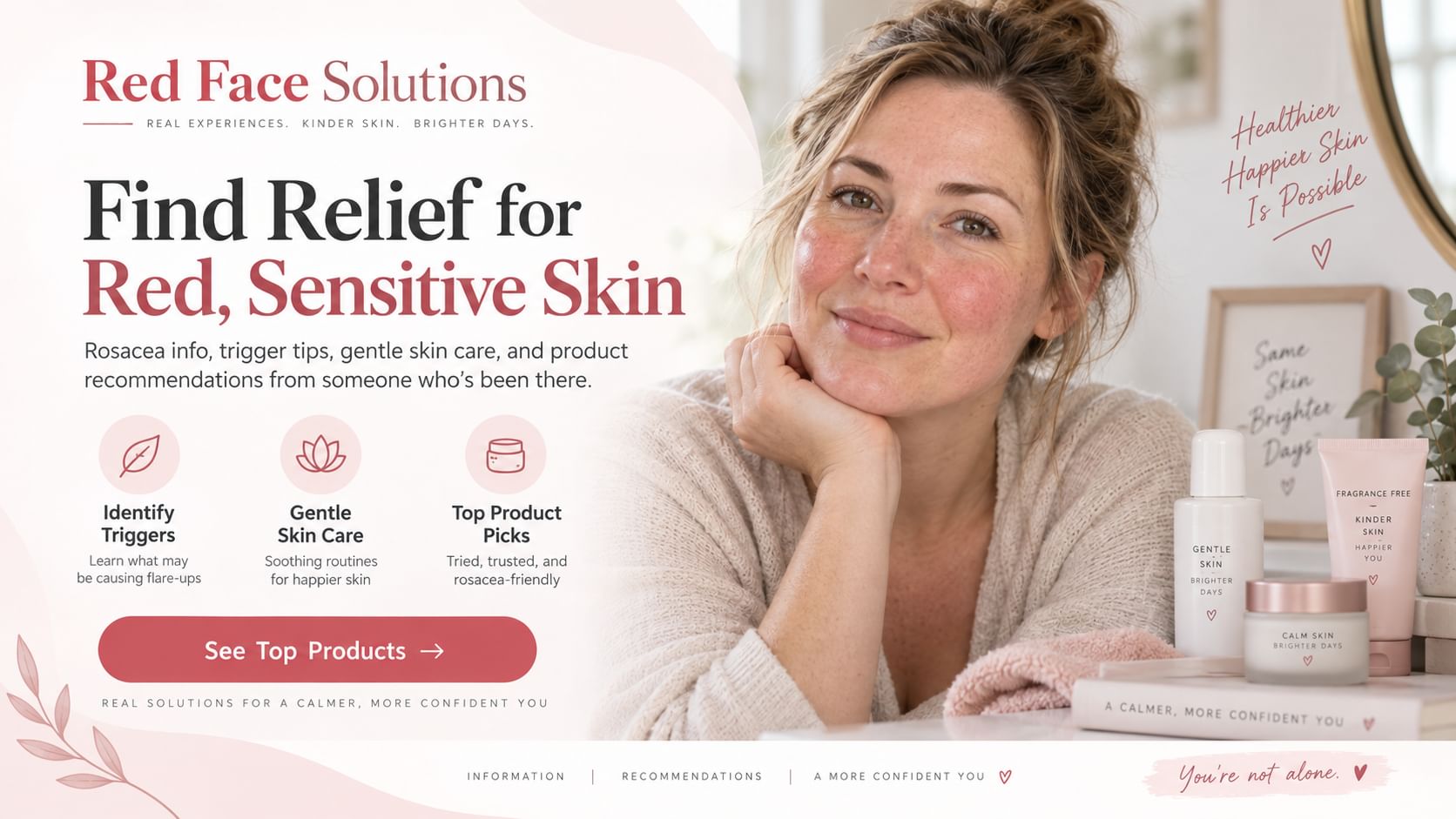
Why Does My Face Get Red and Hot?
If your face suddenly feels warm, looks flushed, or turns bright red, you’re not alone. Facial redness and heat can be a normal, temporary reaction (like blushing), a sign of irritated or sensitive skin, or a symptom of an underlying skin or health condition.
The key is pattern. Does it happen after specific triggers, then fade? Or is it persistent, worsening, painful, or paired with bumps, scaling, swelling, or eye symptoms? Those details help narrow down what’s going on, and whether you can manage it with lifestyle and gentle skincare or should consider a medical evaluation.
The most common reason: temporary facial flushing
“Flushing” is a short-term widening of blood vessels near the surface of the skin. When that happens on your cheeks, nose, chin, or forehead, you can look red and feel hot or prickly.
Common flushing triggers include:
- Heat and humidity, hot showers, saunas, or overheated rooms
- Spicy foods and hot drinks
- Alcohol (especially in some people after small amounts)
- Exercise
- Emotional stress, embarrassment, or anxiety
- Sudden temperature changes (cold outdoors to warm indoors)
Temporary flushing typically comes on quickly and fades within minutes to a couple of hours. Your skin may feel warm, but it usually does not stay persistently inflamed day after day.
Rosacea: flushing that can become more persistent over time
Rosacea is a chronic inflammatory skin condition that often includes repeated flushing and longer-lasting redness, especially on the central face (cheeks, nose, and forehead). Some people also develop visible blood vessels, sensitivity or stinging with skincare, acne-like bumps, or eye irritation.
Not every red, hot face is rosacea, and you cannot confirm rosacea from a single symptom. Still, it’s worth considering professional evaluation if you notice patterns like frequent flushing that’s getting easier to trigger, redness that lingers, or recurring bumps that don’t behave like typical acne.
If you want a deeper overview of how rosacea differs from everyday flushing, this guide may help: /what-is-rosacea.
Sensitive or irritated skin: when your barrier is stressed
Sometimes your face gets red and hot because the skin barrier is irritated, not because of a long-term condition. This can happen after over-cleansing, harsh exfoliation, frequent use of strong actives, or trying multiple new products at once.
Clues that point to irritation or sensitivity include stinging or burning when you apply products, tightness, rough patches, and redness that flares after washing.
Common irritants include:
- Fragrance and essential oils
- Alcohol-heavy formulations (especially denatured alcohol high on the ingredient list)
- Strong acids or frequent exfoliation (glycolic acid, salicylic acid, scrubs)
- Retinoids started too aggressively
- Benzoyl peroxide (very effective for acne, but often irritating)
If this sounds familiar, simplifying your routine for a couple of weeks can be surprisingly revealing.
Contact dermatitis: a reaction to something that touched your skin
Contact dermatitis is inflammation caused by exposure to an irritant or allergen. It can look like redness and swelling, and it can feel hot, itchy, or stingy.
Two main types are involved:
- Irritant contact dermatitis - damage from something harsh (overuse of acids, strong cleansers, frequent hand-to-face contact, or friction from masks).
- Allergic contact dermatitis - an immune reaction to a specific ingredient (fragrance components, preservatives, hair dye chemicals, topical antibiotics, and some sunscreen filters can be triggers for certain people).
Allergic reactions may show up hours to days after exposure, which makes “finding the culprit” tricky. If you suspect allergy, a clinician can help, and patch testing may be recommended.
Acne and acne treatments: redness from inflammation, not just pimples
Acne can make skin look red and feel warm because inflammation increases blood flow. But often, the bigger driver of “hot, red skin” in acne routines is irritation from treatment products.
This is especially common if you combine multiple strong products (for example, benzoyl peroxide plus a retinoid plus frequent exfoliation) or use them too often too soon. If your face looks red beyond the actual breakouts, or it burns when you moisturize, the routine may be too aggressive for your skin barrier.
Eczema (atopic dermatitis): dry, itchy redness that can burn
Eczema can cause red, inflamed patches that feel hot, itchy, and dry. On the face, eczema often shows up around the eyes, cheeks, and mouth area, and it may flare with weather changes, stress, or irritating products.
Because eczema on the face can overlap visually with other rashes, it’s a good idea to get persistent or recurring facial eczema evaluated, especially if you’re tempted to use steroid creams on your face without guidance.
Seborrheic dermatitis: redness with flaky or greasy scale
Seborrheic dermatitis commonly affects the areas around the nose, eyebrows, and hairline. It can look red and feel irritated, and it often comes with flaky scale that may look oily or yellowish.
People sometimes confuse this with “dry skin,” rosacea, or an allergy. The distribution (nose creases, eyebrows, scalp involvement) and the scale pattern are helpful clues. If it keeps coming back, a clinician can confirm what it is and recommend appropriate treatments.
Sunburn and heat rash: the obvious causes that still get overlooked
Sunburn is a classic reason your face feels hot, tight, and looks red. Even mild sunburn can create lingering redness for days, and repeated exposure can worsen overall facial sensitivity.
Heat rash is different - it’s related to sweat ducts getting blocked, usually in hot, humid conditions. It can cause tiny bumps and a prickly, hot sensation.
Daily sun protection matters for everyone, but it can be especially important if you flush easily or have redness-prone skin. If you’re exploring options, this sunscreen guide is a useful starting point: /best-sunscreen-for-rosacea.
Allergic reactions: when redness comes with swelling, hives, or rapid change
Allergies can cause facial redness and heat, but the bigger red flags are swelling (especially lips, eyelids, or face), hives, widespread itching, or symptoms that appear rapidly after a food, medication, or insect sting.
Seek urgent medical care right away if facial redness is accompanied by trouble breathing, throat tightness, wheezing, faintness, or rapid swelling. Those can be signs of a severe allergic reaction.
Less common but important: medication effects and medical conditions
Some medications and health conditions can cause flushing. Examples include niacin (vitamin B3 at higher doses), certain vasodilators, and some prescription drugs. Hormonal shifts, perimenopause and menopause hot flashes, thyroid disorders, fever, and other systemic issues can also play a role.
You don’t need to assume something serious, but it’s smart to zoom out if flushing is new, frequent, and not clearly tied to common triggers like heat, alcohol, or spicy foods. A clinician can help you review medications, symptoms, and possible underlying contributors.
Quick self-check: what your symptoms can tell you
A few “pattern clues” can help you decide your next step:
If it’s sudden, brief, and trigger-based (heat, exercise, embarrassment), temporary flushing is more likely.
If it’s frequent, easier to trigger over time, centered on cheeks and nose, or paired with sensitivity or acne-like bumps, rosacea may be worth discussing with a dermatologist.
If it’s itchy, swollen, or appears after a new product, think contact dermatitis or allergy.
If it’s flaky in the nose creases or eyebrows, consider seborrheic dermatitis.
If it’s intensely red after sun exposure and feels tight and sore, sunburn is likely.
What you can do at home right now (without making it worse)
Start with the goal of calming skin and reducing triggers rather than “treating redness aggressively.” Many people accidentally intensify facial heat and redness by scrubbing, over-exfoliating, or product-hopping.
A practical reset plan:
Use a gentle, fragrance-free cleanser once daily (or just rinse with lukewarm water in the morning if cleansing twice leaves you tight).
Moisturize consistently with a simple, barrier-supporting moisturizer. Look for ingredients like ceramides, glycerin, and petrolatum or dimethicone if you tolerate them.
Avoid hot water, vigorous rubbing, and textured cleansing tools for now.
Pause strong actives for one to two weeks if your skin is stinging, burning, or noticeably more red than usual. That includes exfoliating acids, scrubs, and high-strength retinoids.
Wear broad-spectrum sunscreen daily. Choose a formula that feels comfortable enough to actually use consistently, because consistency matters more than chasing the “perfect” product.
If flushing is the issue, keep a simple trigger log for a couple of weeks. Write down what you ate or drank, temperature changes, stress, workouts, and products used. Patterns often show up faster than you’d expect.
Makeup and redness correctors: helpful for appearance, not a medical treatment
If redness bothers you cosmetically, green-tinted primers and redness-correcting products can neutralize the look of redness, and gentle concealers can even out tone. These products can be a confidence boost, but they do not treat the underlying cause of facial redness.
If you’re curious about how color correction works and how to choose formulas that are less likely to sting, you may find this guide helpful: /redness-corrector.
When it’s time to get professional help
Consider scheduling an evaluation (primary care clinician or dermatologist) if:
- Redness is persistent, worsening, painful, or not clearly linked to triggers
- You have acne-like bumps, thickening skin, or visible blood vessels that are increasing
- Your eyes feel gritty, burn, look red, tear excessively, or you have recurrent styes
- You have frequent flushing with new systemic symptoms (fever, diarrhea, wheezing, palpitations, unexplained weight change, or faintness)
- You suspect an allergic reaction to skincare or cosmetics, especially if swelling or hives are involved
Bring photos if you can. Because facial flushing can come and go, pictures taken during a flare can help a clinician identify patterns and rule out look-alike conditions.
Facial redness and heat can be frustrating, but in many cases, the cause becomes clearer once you track triggers, reduce irritation, and pay attention to accompanying symptoms. If the redness is sticking around or affecting your eyes or comfort, getting a professional opinion can help you move from guessing to a plan you can trust.
News