
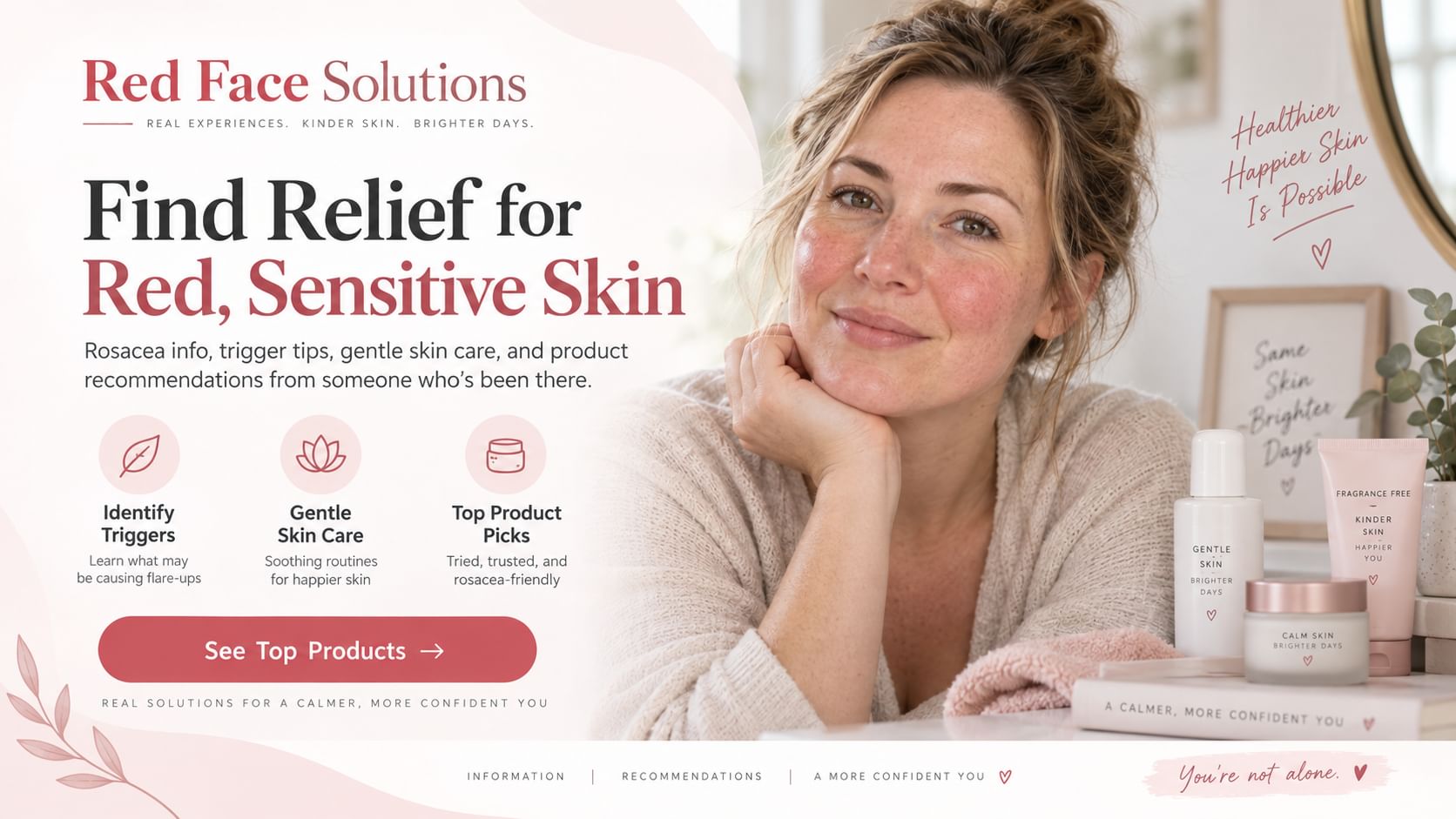
Best Moisturizers for Rosacea-Prone Skin
A good moisturizer can make rosacea-prone skin feel calmer and look less irritated, but it cannot “cure” rosacea. Also, not all facial redness is rosacea. Redness can come from temporary flushing, sensitive or irritated skin, acne, eczema, seborrheic dermatitis, contact dermatitis, sunburn, allergic reactions, medication side effects, or other medical conditions.
If your redness is persistent, worsening, painful, crusting, associated with swelling or hives, or involves eye symptoms (burning, gritty sensation, light sensitivity, eyelid irritation), it is worth getting evaluated by a clinician, ideally a dermatologist. Rosacea can also overlap with other skin issues, so the “right” moisturizer often depends on what else is going on.
What Makes a Moisturizer “Rosacea-Friendly” (And What Usually Backfires)
Most rosacea-prone skin does best with moisturizers that support the skin barrier and minimize potential triggers. Dermatology organizations commonly emphasize gentle skincare, barrier repair, and daily sun protection as core supportive steps.
Here is what tends to matter most when you are choosing a moisturizer:
Barrier support over “stingy actives” Ingredients like ceramides, cholesterol, fatty acids, glycerin, dimethicone, and petrolatum are often helpful because they reduce water loss and support the outer skin layer. Many people with rosacea-prone skin notice that their redness and stinging get worse when the barrier is compromised.
Fewer irritants, fewer surprises Fragrance (including essential oils), cooling agents like menthol, and many denatured alcohol-heavy formulas can be irritating. “Natural” is not automatically gentler. A short, simple ingredient list is often easier to tolerate.
Texture that matches your skin type If you are oily or acne-prone, you may prefer lightweight lotions or gel-creams that still contain barrier-supporting ingredients. If you are very dry or flaking, a richer cream or ointment-like balm may reduce tightness and scaling.
Packaging matters more than you would think Airless pumps and tubes can reduce contamination and help preserve formula stability. Jars are not “bad,” but they require clean hands and can expose formula to air and repeated contact.
How We Chose These Picks (So “Best” Actually Means Something)
To keep this guide practical and trustworthy, the moisturizers below were selected using criteria that directly matter for rosacea-prone and easily flushed skin:
- Widely verifiable, real products from established brands with consistent availability
- Fragrance-free (or clearly positioned as fragrance-free), and generally designed for sensitive skin
- Strong barrier-support profile (humectants like glycerin, occlusives like petrolatum, and/or ceramides)
- Options across textures and budgets, because one “best” formula does not fit everyone
- No claims that a moisturizer alone treats rosacea as a disease
Even with “safe” formulas, individual reactions vary. If you are reactive, patch test first by applying a small amount to the side of the jawline or behind the ear for several days before using it all over your face.
Best Overall Barrier Cream for Rosacea-Prone Skin: CeraVe Moisturizing Cream
CeraVe Moisturizing Cream is a go-to for barrier support because it focuses on ceramides and long-lasting hydration. It is thick, protective, and often works well when your skin feels tight, rough, or stingy from dryness.
Why it can be a strong choice for rosacea-prone skin is that it is more about restoring comfort than delivering aggressive “results.” Many people use it successfully as a basic moisturizer while they work with a clinician on rosacea-specific treatment.
Potential downside: the rich texture can feel heavy for very oily skin, and some people prefer a lighter lotion during the day.
Best Lightweight Daily Option: CeraVe PM Facial Moisturizing Lotion
If you want barrier support without a heavy finish, CeraVe PM Facial Moisturizing Lotion is a popular lightweight option. It is designed to moisturize without feeling greasy, which can be helpful if you flush easily or dislike thick creams during the day.
It is often chosen by people who want something simple under sunscreen or makeup. If your skin is very dry or actively flaring, you may still prefer a richer cream at night.
Best “Calm-Down” Moisturizer for Easily Irritated Skin: La Roche-Posay Toleriane Double Repair Face Moisturizer
La Roche-Posay’s Toleriane Double Repair Face Moisturizer is built around barrier support and comfort, and it is commonly recommended in sensitive-skin routines. The texture is typically easy to layer, and it tends to work well for people who dislike heavy occlusive finishes but still need reliable hydration.
This is the kind of moisturizer that fits a minimalist routine: cleanse gently, moisturize, then use sunscreen in the morning.
Best Budget-Friendly Workhorse: Vanicream Moisturizing Cream
Vanicream Moisturizing Cream is a classic “keep it simple” product. It is often used for very sensitive skin because it avoids many common cosmetic triggers, and it provides strong moisture for the price.
This is a smart pick if you react to a lot of formulas, or if you want a plain moisturizer to pair with prescription rosacea medications that can cause dryness or irritation.
Because it is rich, some people reserve it for nights, dry patches, winter weather, or post-shower use.
Best for Very Dry, Compromised Skin: Avène Cicalfate+ Restorative Protective Cream
When rosacea-prone skin gets very dry or irritated, many people look for a thicker, more protective cream that acts like a comfort “seal.” Avène Cicalfate+ Restorative Protective Cream is widely used for barrier discomfort and visibly dry, stressed skin.
It can be especially appealing during cold, windy months or after a trigger leaves your skin feeling raw. The tradeoff is that it can feel heavy, and very acne-prone users may prefer a lighter barrier cream.
Best Ultra-Gentle, Minimalist Moisturizer: Avène Tolérance Control Soothing Skin Recovery Cream
If your main issue is stinging and unpredictability - where even “sensitive skin” products sometimes burn - Avène Tolérance Control Soothing Skin Recovery Cream is a commonly chosen minimalist option.
This type of formula tends to work best when you stop experimenting and give your skin a consistent baseline. If your skin is both reactive and dry, you may still need an occlusive layer on top in harsh weather.
Best “Slugging” Option for Overnight Barrier Support: Vaseline Original Healing Jelly (100% Petrolatum)
Plain petrolatum is not glamorous, but it is one of the most effective ways to reduce transepidermal water loss. Vaseline Original Healing Jelly can be helpful if your skin barrier is severely dry and you need an overnight seal.
How to use it without feeling greasy: apply your regular moisturizer first, then press a very thin layer of petrolatum onto the driest areas (often cheeks). Many people do not need it nightly - just during flares, winter dryness, or when starting a drying prescription.
If you are acne-prone, use it cautiously, keep layers thin, and avoid areas where you break out easily.
Best Makeup-Friendly Moisturizer Base: Neutrogena Hydro Boost Gel-Cream (Fragrance-Free)
For people who want a smoother, lighter base under makeup, Neutrogena Hydro Boost Gel-Cream (Fragrance-Free) is often chosen because it hydrates without heaviness. Gel-creams can feel more comfortable if your face flushes easily, especially in warm weather.
The key is choosing the fragrance-free version. If your skin is very dry, you may need to layer a more substantial cream at night.
For additional help visually neutralizing redness, you can also pair your moisturizer with a green-tinted corrector. Our guide on best redness corrector for rosacea can help you compare options without confusing cosmetics with medical treatment.
Ingredients That Usually Help Rosacea-Prone Skin (And How to Use Them)
Barrier lipids - ceramides, cholesterol, and fatty acids These support the outer layer of skin. In practice, they often help reduce “tight and hot” feelings that follow cleansing or weather changes.
Humectants - glycerin and hyaluronic acid These attract water to the skin. They can be very helpful, but if you live in a very dry climate, you may get better comfort by layering a cream or a thin occlusive on top.
Occlusives - petrolatum and dimethicone These reduce water loss. Dimethicone often feels silkier and more makeup-friendly, while petrolatum is stronger but greasier.
Niacinamide - helpful for some, irritating for others Niacinamide is widely used to support barrier function and reduce the look of blotchiness. Many people tolerate it well, but higher concentrations can sting in reactive skin. If you know niacinamide bothers you, choose a niacinamide-free moisturizer and keep the rest of your routine extra simple.
Ingredients and Product Features That Commonly Trigger Stinging
Rosacea-prone skin can react to a wide range of ingredients, but these are frequent offenders when skin is sensitive or actively inflamed:
Fragrance and essential oils Even if a product smells “light” or “clean,” fragrance components can be irritating, especially with daily use.
High levels of alcohol (often listed as alcohol denat.) Some formulas use it for a fast-drying feel. For reactive skin, that quick “dry down” can come with barrier stress and more flushing.
Exfoliating acids and strong actives inside a moisturizer Alpha hydroxy acids, beta hydroxy acids, and retinoids have their place, but combining them with rosacea-prone skin and an impaired barrier can backfire. If you use these ingredients, it is often safer to do so intentionally in a separate step, slowly, and ideally with professional guidance.
“Cooling” botanicals Menthol, peppermint, camphor, and similar ingredients may feel soothing for a moment, but they can trigger redness and burning in the long run.
A Simple Rosacea-Prone Moisturizing Routine That Actually Works
Keeping your routine consistent often does more for comfort than constantly switching products.
Morning Use a gentle cleanser or just lukewarm water if cleansing stings, moisturize, then apply a sunscreen that you can tolerate. Sun protection is especially important because ultraviolet exposure is a common rosacea trigger.
If you are shopping for sunscreen that works with sensitive, redness-prone skin, see best sunscreens for rosacea for practical options and what to look for.
Night Cleanse gently, moisturize, and consider a thin occlusive layer on dry areas if needed. If you are using a prescription rosacea medication, apply it as directed, and use moisturizer to reduce dryness and irritation.
A practical tip: introduce only one new product at a time, and use it for at least one to two weeks before changing something else. That makes it much easier to identify what is helping - or what is causing a reaction.
When a Moisturizer Is Not Enough (And What to Ask About Instead)
Moisturizers can reduce dryness, tightness, and irritation, which may make redness look less intense. But persistent facial redness, visible blood vessels, acne-like bumps, or eye irritation may require medical evaluation.
A clinician may discuss prescription options depending on symptoms, such as topical azelaic acid, ivermectin, metronidazole, or alpha-agonists for facial erythema. These medications have specific approved uses, directions, and side effects, and they are not interchangeable with cosmetics or basic skincare.
If you are unsure whether you are dealing with rosacea or something else - like acne, eczema, seborrheic dermatitis, or contact dermatitis - it is especially worth getting guidance before you keep experimenting. The “wrong” product type can accidentally keep a rash going for months.
Picking Your Best Match Without Overthinking It
If you want the simplest way to choose, match the texture to your skin and prioritize fragrance-free barrier support. Start with one dependable moisturizer, use it consistently, and judge it by comfort over time, not by instant “calming” sensations.
For many people with rosacea-prone skin, the best moisturizer is the one that does not call attention to itself - it helps your skin feel steady, layers well with sunscreen, and does not sting when your skin is having a rough week.
News