
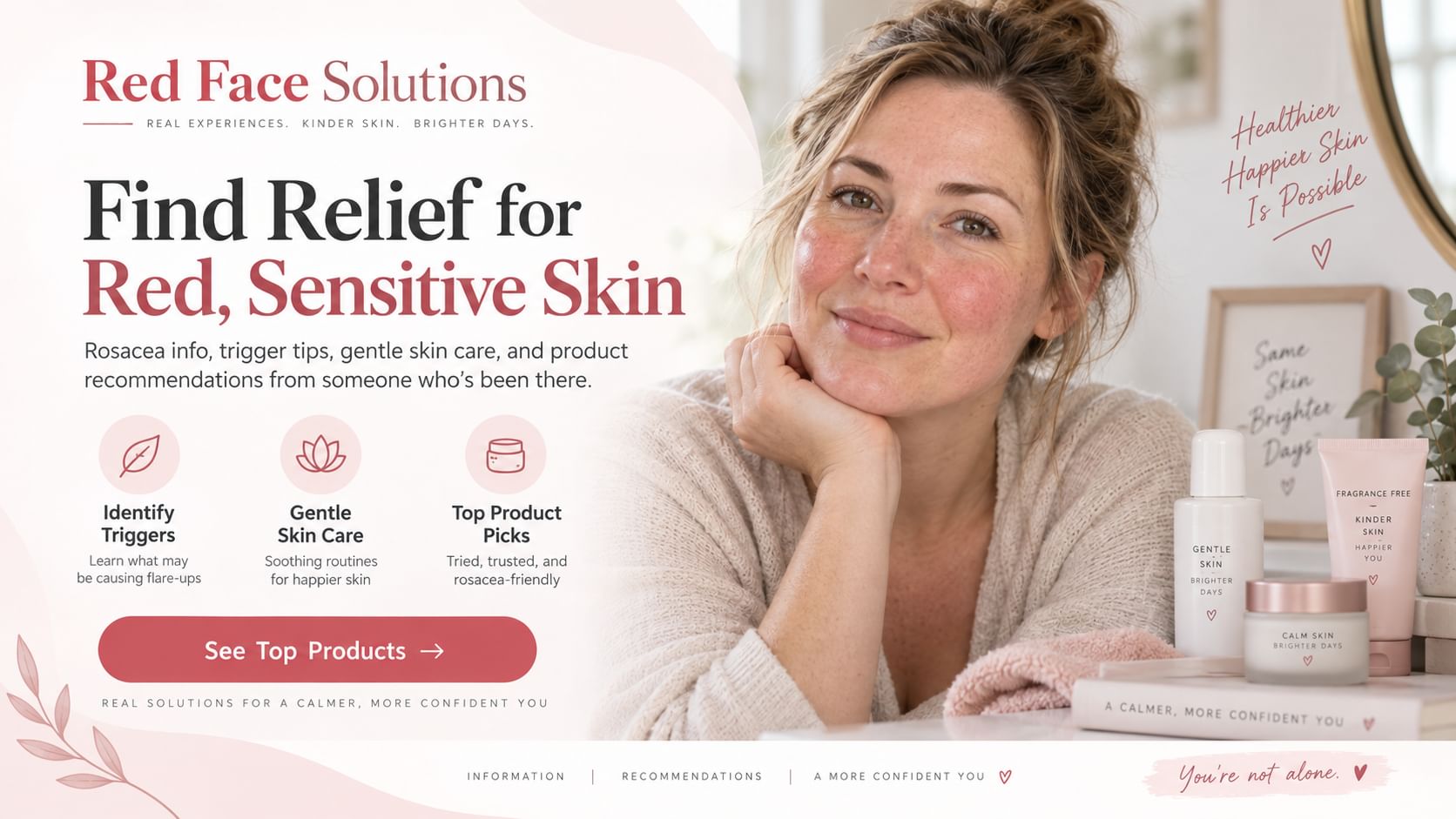
Best Redness Correctors for Rosacea
When people search for the “best redness corrector for rosacea,” they’re usually looking for one of two things:
- A cosmetic product that visually neutralizes redness right away (green-tinted primers, color correctors, concealers, and foundations).
- A skin product or medication that may help reduce the look of facial redness over time (typically a prescription for persistent facial erythema in rosacea, or gentle skincare that supports the skin barrier).
Those goals are not the same, and mixing them up can lead to disappointment. Makeup can hide redness but does not treat rosacea. Prescription medications may temporarily reduce visible redness, but they are not “makeup,” and results vary.
It’s also worth saying clearly: not all facial redness is rosacea. Temporary flushing, irritation, acne, eczema, seborrheic dermatitis, contact dermatitis, sunburn, allergic reactions, and other conditions can look similar. If redness is persistent, worsening, painful, associated with swelling, or involves eye symptoms (burning, gritty feeling, eyelid irritation, light sensitivity), it’s smart to seek professional evaluation.
The Smart Criteria We Used to Pick “Best” Options
For rosacea-prone or easily flushed skin, the “best” redness corrector tends to have a specific profile:
A redness-correcting makeup product should ideally be:
- Fragrance-free (or at least very low fragrance) and gentle for sensitive skin.
- Green-tinted or “tone correcting” in a way that cancels visible redness without looking gray.
- Easy to blend with fingers (less friction) and buildable (so you can use less product).
- Compatible with sunscreen and moisturizer underneath without pilling.
- Not overly drying, because dryness can make redness look worse.
A redness-reducing medication (when appropriate) should be:
- Used under the guidance of a licensed clinician.
- Clearly labeled for what it is approved to treat.
- Approached realistically, with awareness of side effects and rebound/worsening risk in some people.
If you’re new to color correction, you may also like our explainer on green concealer for redness for quick technique tips.
Best Overall Makeup “Redness Corrector” for Rosacea: Dr. Jart+ Cicapair Tiger Grass Color Correcting Treatment SPF 30
Dr. Jart+ Cicapair Tiger Grass Color Correcting Treatment is popular for a reason: it’s one of the easiest “one-and-done” options for people who want visible redness to look calmer fast without doing a full face of foundation.
It applies as a pale green-beige cream and shifts closer to a skin-like tint as you blend, helping diffuse redness rather than fully covering it like heavy makeup. The finish is typically more “skin-like” than a thick concealer layer, which many people with texture and sensitivity appreciate.
What to know before you buy:
- It includes sun protection, but many dermatology organizations recommend treating sunscreen like a “measured application” product. If you use too little to avoid a heavy look, you may not get the labeled protection.
- If you’re very fair or very deep in skin tone, the tone-shifting tint may not disappear seamlessly, so test in natural light.
- If your skin is extremely reactive, introduce it slowly and patch test, because even well-loved products can irritate the wrong person.
If you want a deeper dive on daily sun habits for redness-prone skin, see best sunscreen for rosacea.
Best Color-Correcting Primer for “Less Red, Not More Makeup”: Make Up For Ever Step 1 Primer Color Corrector (Green)
If you like your skin to still look like skin, a green primer is often the most forgiving way to correct redness. Make Up For Ever Step 1 Primer in green is designed to be worn under foundation or tinted moisturizer, but many people also dab it just on the areas that flare most, like the sides of the nose or central cheeks.
Why it works well for rosacea-prone routines:
- You can use a very small amount only where you need it, which reduces the chance of product buildup and caking.
- It plays nicely with lightweight base makeup, so you can stop at “evened out” instead of chasing full coverage.
Technique matters with green primers. If you apply too much, the skin can look dull or gray. Start with a tiny dot, press (don’t rub) it in, then add concealer only where needed.
Best Targeted Spot Corrector for Stubborn Patches: NYX Professional Makeup Studio Perfect Color Correcting Concealer (Green)
For many people with rosacea-type redness, not every area needs correcting. Sometimes it’s just around the nose, a couple of cheek zones, or a single inflamed-looking patch that throws off the whole face.
NYX Studio Perfect Color Correcting Concealer in green is a practical, budget-friendly option for targeted correction. It’s especially useful if you want to neutralize small areas and then go in with a skin-tone concealer on top, instead of putting a green product across the whole face.
Tips that make it look more natural:
- Apply the thinnest layer possible.
- Tap it in with a fingertip to reduce friction.
- Let it set for 30 to 60 seconds, then gently add a skin-tone concealer only where you still see redness.
Best Gentle “Do-It-All” Coverage for Redness: Clinique Redness Solutions Makeup Broad Spectrum SPF 15
If you want a traditional foundation-style product developed with facial redness in mind, Clinique Redness Solutions Makeup is a well-known option. It’s made to provide moderate coverage with a finish that doesn’t scream “makeup,” which can be helpful if you flush easily and don’t want frequent touch-ups.
This is usually a better pick for people who:
- Prefer one base product instead of layering primer plus concealer.
- Want coverage that stays relatively even through the day.
- Find that spot correcting makes their texture more noticeable.
A note on expectations: even the best base makeup may not completely hide intense flushing in real time. Rosacea and flushing can create warmth and color that changes throughout the day. The goal is often “less noticeable,” not “perfectly erased.”
Best for Full-Cover Days (Photos, Events, Confidence Boosts): IT Cosmetics Bye Bye Redness Neutralizing Color-Correcting Cream
When redness is strong and you want more coverage than a tinted corrector can give, IT Cosmetics Bye Bye Redness is a cult favorite because it’s highly pigmented and designed to neutralize.
It tends to work best when you treat it like concentrated product, not like moisturizer:
- Use a tiny amount.
- Warm it between fingertips.
- Press it onto redness, then blend edges outward.
Because it’s richer and more opaque, it can be less forgiving if your skin is flaking or irritated. On dry, sensitized days, you may get a smoother result by focusing first on barrier support (gentle moisturizer, no harsh actives) and using a lighter base.
Best “Correction Plus Mineral Sunscreen” in One Step: Colorescience Sunforgettable Total Protection Face Shield FLEX SPF 50
If you want visible tone evening plus strong daily sun protection, a tinted mineral sunscreen can be a smart hybrid option. Colorescience Face Shield FLEX SPF 50 is designed to adjust to your skin tone as you blend, which can help soften the contrast between red areas and non-red areas.
Why this category matters for rosacea-prone skin:
- Sun exposure is a common trigger for many people with rosacea, and it can also worsen visible redness over time.
- Mineral filters like zinc oxide and titanium dioxide are often better tolerated by sensitive skin, although individual reactions still vary.
The tradeoff: tinted sunscreens can transfer more than traditional foundation if you apply the amount needed for full protection, and shade matching isn’t perfect for everyone. Still, if you like the “I’m protected and I look more even” feeling, it’s a strong everyday pick.
Best Budget-Friendly Green Corrector That Layers Well: e.l.f. Camo Color Corrector (Green)
If you want to try green correction without spending much, e.l.f. Camo Color Corrector is widely available and easy to layer. It’s a good option for experimenting with placement and amount, which is often the real key to success with redness correction.
The most common mistake is using green like concealer. Think of it as “tinting the redness down,” then finishing with a skin-tone product only if you still need it.
If you’re building an affordable routine, you may also like drugstore rosacea skincare for gentle, budget-conscious picks that pair well with corrective makeup.
Prescription Option That Can Reduce Persistent Facial Redness (Not Makeup): Rhofade (Oxymetazoline Hydrochloride) Cream 1%
Some people searching for “redness corrector” are actually hoping to reduce the visible redness itself, not just cover it. For persistent facial erythema associated with rosacea, clinicians may prescribe topical vasoconstrictors.
Rhofade (oxymetazoline hydrochloride) cream 1% is a prescription medication approved for persistent facial erythema associated with rosacea in adults. It works by constricting blood vessels in the skin, which can temporarily reduce visible redness for some people.
Important, practical realities:
- It does not cure rosacea.
- Results vary, and not everyone responds.
- Some people report worsening redness after it wears off (sometimes described as rebound). If that happens, a prescriber may adjust frequency, switch options, or recommend discontinuation.
- It should be used exactly as directed and kept away from eyes and lips unless specifically instructed.
If you’re exploring medical options for redness and bumps, rosacea treatment options can help you understand what’s cosmetic versus prescription, and what questions to ask at an appointment.
How to Choose the Right Corrector for Your Redness Pattern
Rosacea-related redness often shows up as central facial redness that can fluctuate, sometimes with visible blood vessels, bumps, or stinging. But many other issues can look similar, and the “right” corrector depends on what’s actually happening on your skin that day.
A quick way to match product type to need:
- Mostly redness, minimal texture: a green primer or tint corrector can be enough.
- Redness plus blemish-like spots: spot correct with green, then cover with a gentle concealer.
- Redness plus dryness or flaking: prioritize moisturizer first, then use a thinner corrector in minimal amounts.
- Strong flushing that changes during the day: consider flexible, buildable products and keep expectations realistic.
If you suspect your redness might be eczema, contact dermatitis, seborrheic dermatitis, sunburn, or an allergic reaction, be cautious with new cosmetics. Those conditions often need a different approach than color correction alone, and adding more products can sometimes make irritation worse.
A Simple, Rosacea-Friendly Routine for Using Redness Correctors (Without Overdoing It)
Keeping your routine gentle tends to make redness correction easier, because makeup sits better on a calmer barrier.
A practical order of operations:
- Gentle cleanser (or just lukewarm water in the morning if cleansing feels irritating).
- Moisturizer that supports the barrier.
- Sunscreen (let it set).
- Redness corrector (green) where needed.
- Skin-tone concealer or foundation only if you still want more coverage.
Try to avoid “stacking” lots of actives under corrective makeup. Strong exfoliating acids, scrubs, and high-percentage retinoids can increase stinging and visible redness for some people, especially during a flare.
Ingredient and Irritant Watch: What Often Makes Redness Look Worse
People with rosacea-prone or very sensitive skin often do better with fewer potential irritants, especially during flares. While everyone’s triggers are different, these are common categories to approach carefully:
- Fragrance and heavily scented essential oils
- Alcohol-heavy formulas that feel instantly “drying”
- Harsh exfoliants or frequent scrubbing
- Hot water and high-friction application (rubbing in product)
Also keep in mind that “natural” doesn’t automatically mean gentle. The most “rosacea-friendly” option is usually the one your skin tolerates consistently.
Patch Testing and Shade Testing: Small Steps That Prevent Big Regrets
Even excellent redness correctors can fail if the shade or texture isn’t right for you. Two quick habits help:
Patch test: Apply a small amount behind the ear or along the jawline for a few days to see if you get stinging, bumps, or worsening redness.
Shade test in daylight: Green correction should fade into your base. If it leaves a visible cast, use less, switch to a sheerer formula, or choose a tinted product designed to blend to skin.
When Redness Needs More Than a Corrector
Consider professional evaluation if you have:
- Persistent redness that’s new, worsening, painful, or unexplained
- Eye symptoms (dryness, burning, gritty sensation, recurrent styes, eyelid redness)
- Severe flushing episodes, swelling, or skin that stings with almost everything
- Redness plus scaling, cracking, oozing, or hives (which may suggest dermatitis or an allergic reaction)
A redness corrector can be a confidence tool, but it shouldn’t be the only plan if symptoms are progressing.
If you want the most dependable approach, aim for a gentle base routine, daily sun protection, and a corrector that you can apply with a light hand. The “best” option is the one that makes redness less noticeable while keeping your skin comfortable, stable, and supported day after day.
News