
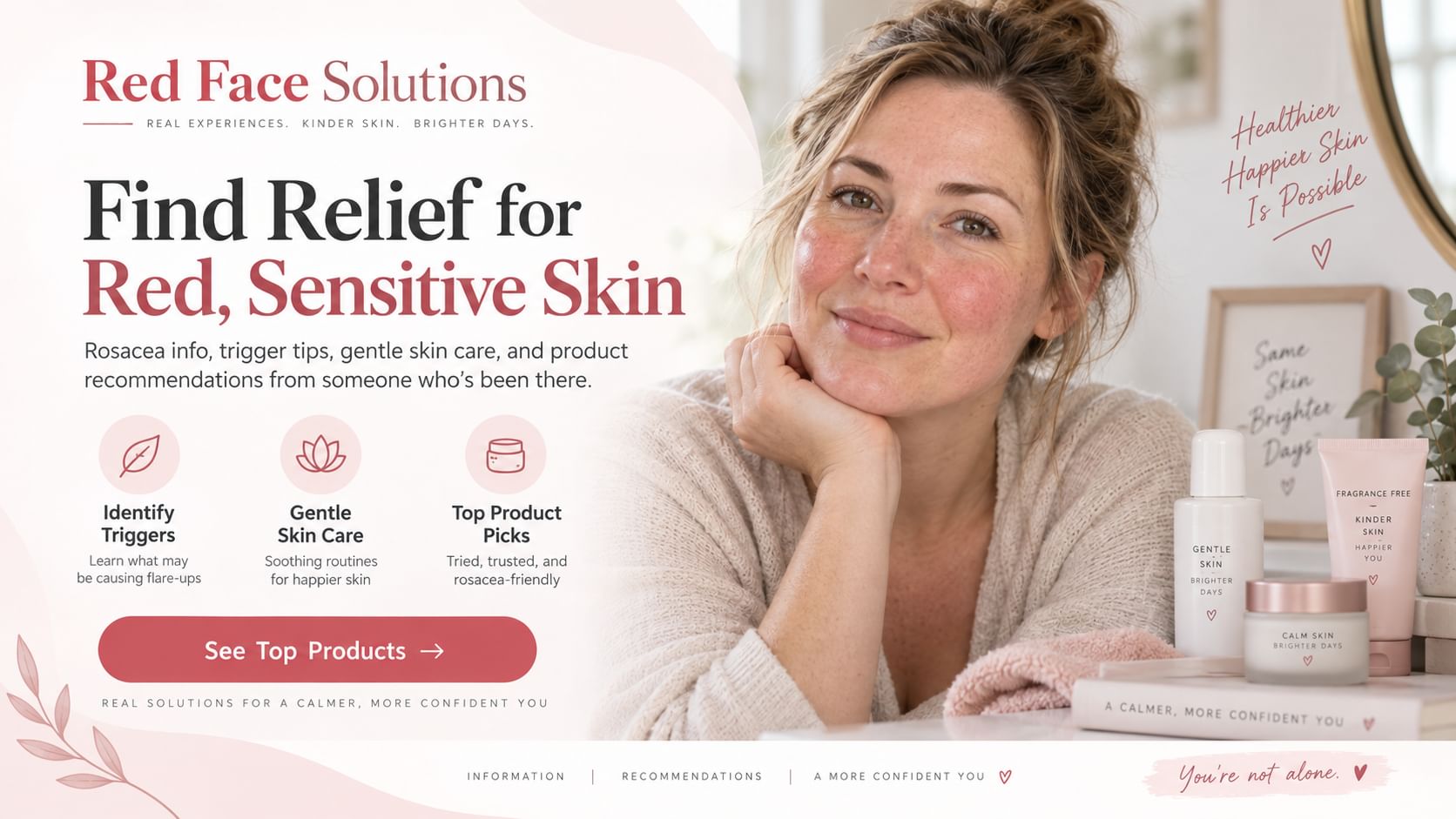
How to Moisturize Dry Skin With Rosacea
Dryness and rosacea can be a frustrating combo. Your skin may feel tight, rough, or flaky, but many “extra rich” products can also sting, trigger flushing, or leave you looking redder than before.
This guide focuses on practical, gentle ways to moisturize when you have rosacea-prone, easily irritated skin. It is not a diagnosis. Facial redness can come from many causes, and the right approach depends on what is actually driving your symptoms.
First, Make Sure “Rosacea Dryness” Is Not Something Else
People often search for “dry skin with rosacea” when what they are seeing is irritation or inflammation disrupting the skin barrier. That can happen with rosacea, but it also happens with other conditions that need different care.
Facial redness and dryness can overlap with:
- Temporary flushing (heat, alcohol, stress, exercise)
- Sensitive or irritated skin from over-exfoliating, retinoids, acids, harsh cleansers, or weather
- Acne (especially if you are using drying acne treatments)
- Eczema (atopic dermatitis), which often itches and can affect the eyelids
- Seborrheic dermatitis (often greasy scale around the nose, brows, or scalp)
- Contact dermatitis (irritant or allergic reactions to skincare, haircare, fragrance, or preservatives)
- Sunburn or windburn
- Allergic reactions (especially sudden swelling, hives, or intense itching)
Consider a professional evaluation if redness is persistent and unexplained, painful, rapidly worsening, associated with swelling or oozing, or involves your eyes (burning, gritty feeling, eyelid inflammation, light sensitivity, or vision changes). Eye symptoms can occur with rosacea, but they should not be self-treated without guidance.
The Real Goal: Hydrate, Then Seal - Without Making You Flare
Moisturizing rosacea-prone dry skin is less about “the richest cream” and more about rebuilding comfort while avoiding common triggers.
A moisturizer helps through three main actions:
- Humectants pull water into the outer layer of skin (examples: glycerin, hyaluronic acid).
- Emollients smooth and soften roughness (examples: squalane, dimethicone, ceramides).
- Occlusives slow water loss by forming a protective layer (examples: petrolatum, mineral oil).
For rosacea-prone skin, barrier support and low irritation usually matter more than trendy actives. Fragrance, high levels of alcohol, strong essential oils, and “tingly” botanical blends are frequent problems.
A Simple, Rosacea-Smart Moisturizing Routine (Morning to Night)
If you only change one thing, make it consistency. Dry, reactive skin tends to do better with a predictable routine and fewer product switches.
In the morning:
- Cleanse only if you need to. If your skin is very dry, a rinse with lukewarm water may be enough.
- Apply moisturizer while skin is slightly damp to trap water.
- Finish with a gentle, fragrance-free sunscreen every day.
At night:
- Remove sunscreen and makeup with a mild cleanser.
- Reapply moisturizer.
- If you are very dry or actively irritated, add a thin sealing layer in targeted areas (often cheeks and around the mouth).
If you want help mapping steps around makeup and redness coverage, see our guide to skincare layering on rosacea-prone skin: /rosacea-skincare-routine.
Choose a Cleanser That Does Not Undercut Your Moisturizer
A great moisturizer cannot fully compensate for a cleanser that strips your barrier twice a day.
Look for a gentle, low-foam cleanser that rinses clean without leaving you squeaky. Many people with rosacea do better with cream cleansers or hydrating gel cleansers.
Try to avoid (especially during flare-ups):
- Scrubs and cleansing brushes
- Very hot water
- High-foam surfactants used aggressively
- Fragranced cleansers or “invigorating” mentholated formulas
If your face feels tighter after cleansing than it did before, that is a signal to change the cleanser or cleanse less.
Ingredients That Often Work Well for Dry, Rosacea-Prone Skin
No ingredient is “one size fits all,” but certain categories tend to moisturize while staying relatively low drama.
Glycerin A classic humectant used in many sensitive-skin moisturizers. It helps hold water in the outer skin layer and is generally well tolerated.
Ceramides, cholesterol, and fatty acids These are skin-identical lipids that support the barrier. Products using a blend of these can be especially helpful when dryness is driven by irritation or over-cleansing.
Dimethicone A lightweight, breathable skin protectant that reduces water loss and can improve a tight, “windburned” feel without being greasy.
Squalane A stable emollient that can soften roughness and reduce the “crinkly” look of dehydrated skin. Many people find it comfortable, but any oil-like ingredient can be hit-or-miss with very reactive skin.
Petrolatum (as a targeted seal) One of the most effective occlusives for preventing water loss. It can be useful on the driest areas at night, especially during winter or when your barrier is compromised. If you are acne-prone, keep it targeted rather than full-face until you know how you respond.
Colloidal oatmeal Common in eczema-friendly products and can be soothing for some irritated skin types. It is not a rosacea “treatment,” but it may improve comfort when dryness is part of a broader irritation pattern.
Ingredients That Commonly Sting or Trigger Redness (Even in “Hydrating” Products)
Many people with rosacea describe stinging as the first sign a product is not a good match. The irritant is not always an “active,” either.
Be cautious with:
- Fragrance and essential oils (including lavender, peppermint, citrus oils, eucalyptus)
- Denatured alcohol high on the ingredient list (can feel weightless but may worsen dryness over time)
- Menthol, camphor, and “cooling” agents
- Strong exfoliating acids (glycolic acid, high-percentage lactic acid, peels)
- High-strength vitamin C formulas (especially low-pH L-ascorbic acid) if you are currently sensitive
- Retinoids if your barrier is already compromised, unless you are using them under dermatology guidance with a slow-start plan
This does not mean you can never use these. It means dryness plus rosacea-prone sensitivity often calls for a “barrier first” season, then careful reintroduction later if needed.
How to Pick the Right Moisturizer Texture for Your Dryness Level
Texture matters because rosacea-prone skin often dislikes heavy, complicated formulas, yet still needs enough barrier support to stop flaking.
Use this as a practical starting point:
- Tightness, mild flaking: lotion or light cream with glycerin and ceramides.
- Rough patches, makeup clinging: richer cream plus a targeted seal on the driest areas at night.
- Burning, stinging, “raw” feeling: very simple formula, fewer ingredients, no fragrance, and avoid piling on multiple products.
If you are shopping, “fragrance-free” is more meaningful than “unscented.” “Unscented” products can still contain masking fragrance.
The “Damp Skin” Trick That Helps More Than Buying a Pricier Cream
Moisturizers work best when you give them water to hold onto.
Try this:
- After cleansing, pat so your skin is not dripping but still slightly damp.
- Apply moisturizer within about one minute.
- If you are extremely dry, apply a second thin layer instead of one thick layer.
This approach often reduces the urge to rub and over-apply, which can create heat and redness.
When a Flare Makes You Flaky: Your Calm-Down Plan
During a flare, the goal is to reduce variables, not “power through” with extra actives.
For one to two weeks, consider:
- Cleanse once daily at night (or less if you can tolerate it).
- Use one moisturizer you already tolerate, twice daily.
- Skip exfoliation, peels, retinoids, and new serums.
- Use sunscreen daily, but pick a gentle formula that does not sting.
If your skin is cracking, painful, or oozing, or if the flare is not settling, it is worth checking in with a dermatologist. Persistent facial dermatitis can look like rosacea but require different treatment.
Sunscreen Is Part of Moisturizing When You Have Rosacea
Sun exposure is a common trigger for flushing and can worsen barrier stress, leading to more dryness.
If you struggle with stinging, mineral sunscreens with zinc oxide and or titanium dioxide are often better tolerated than some chemical filters, although individual reactions vary. Look for fragrance-free options and avoid heavily scented “beachy” formulas.
If sunscreen pills over your moisturizer, try:
- Let moisturizer set for a few minutes before sunscreen.
- Use thinner layers.
- Switch to a more lotion-like moisturizer in the morning.
For a deeper dive, see our rosacea-friendly sun protection guide: /best-sunscreen-for-rosacea.
Makeup and Redness Concealment: Moisturize First, Then Correct Color
Cosmetics can visually reduce redness, but they do not treat rosacea. On dry, textured skin, coverage products can emphasize flakes unless your base is comfortable.
A practical order:
- Moisturizer
- Sunscreen
- Optional green-tinted corrector (thin layer)
- Concealer or foundation only where needed
If you are experimenting with color correction, choose fragrance-free products and introduce them one at a time. Here is our overview of how redness correctors work and what to look for: /redness-corrector-guide.
Patch Testing: A Small Step That Can Save Your Face
With rosacea-prone skin, “gentle” on the label does not guarantee a gentle experience on your skin.
Patch test like this:
- Apply a small amount to the side of the jaw or behind the ear once daily for several days.
- Watch for burning, itching, swelling, or a delayed rash.
- If it passes, introduce it to the full face every other day before moving to daily use.
If you are mid-flare, patch testing is still useful, but keep expectations realistic. Reactive skin can fail products it might tolerate once calm.
If You Use Prescription Rosacea Medication, Moisturizing May Need Extra Planning
Some prescription treatments for rosacea can be drying or irritating at first, even when they work well long term. Your prescribing clinician can help you adjust timing, frequency, and moisturizer pairing.
A few examples you might hear about in dermatology care:
- Topical metronidazole is prescribed for inflammatory rosacea in certain patients and is often considered relatively gentle, but any topical can irritate some skin types.
- Azelaic acid (prescription or over-the-counter strengths) can help bumps and inflammation for some people but may sting on compromised skin.
- Brimonidine gel and oxymetazoline cream are prescription options intended to temporarily reduce persistent facial erythema in some people. They are not moisturizers, and some users experience rebound redness or irritation.
Do not apply new prescription products and a new moisturizer in the same week if you can avoid it. Change one variable at a time so you can tell what is helping and what is not.
Red Flags That Mean “Stop Moisturizing Through It” and Get Help
Moisturizers should improve comfort over days, not steadily make things worse.
Seek medical advice promptly if you notice:
- Eye symptoms (pain, light sensitivity, worsening dryness, crusting lids, or vision changes)
- Rapid swelling, hives, or trouble breathing (urgent care needed)
- Cracking, weeping, honey-colored crusts, or signs of infection
- Severe burning with nearly any product, even bland moisturizers
- Worsening redness and scaling that spreads beyond the central face (may suggest dermatitis rather than rosacea)
The Most Reliable Way to Moisturize Dry Skin With Rosacea
The best results usually come from a boring, barrier-first routine: a non-stripping cleanse, a fragrance-free moisturizer applied to slightly damp skin, daily sunscreen, and fewer “active” steps while your skin is dry.
Once your skin feels comfortable again, you can decide - with patience and patch testing - whether there is room for extras. If symptoms keep recurring or your eyes are involved, a dermatologist can help confirm what is driving the redness and build a plan that moisturizes without triggering flares.
News